
By Joshua Sahr Pettiquoi | 17 June 2026
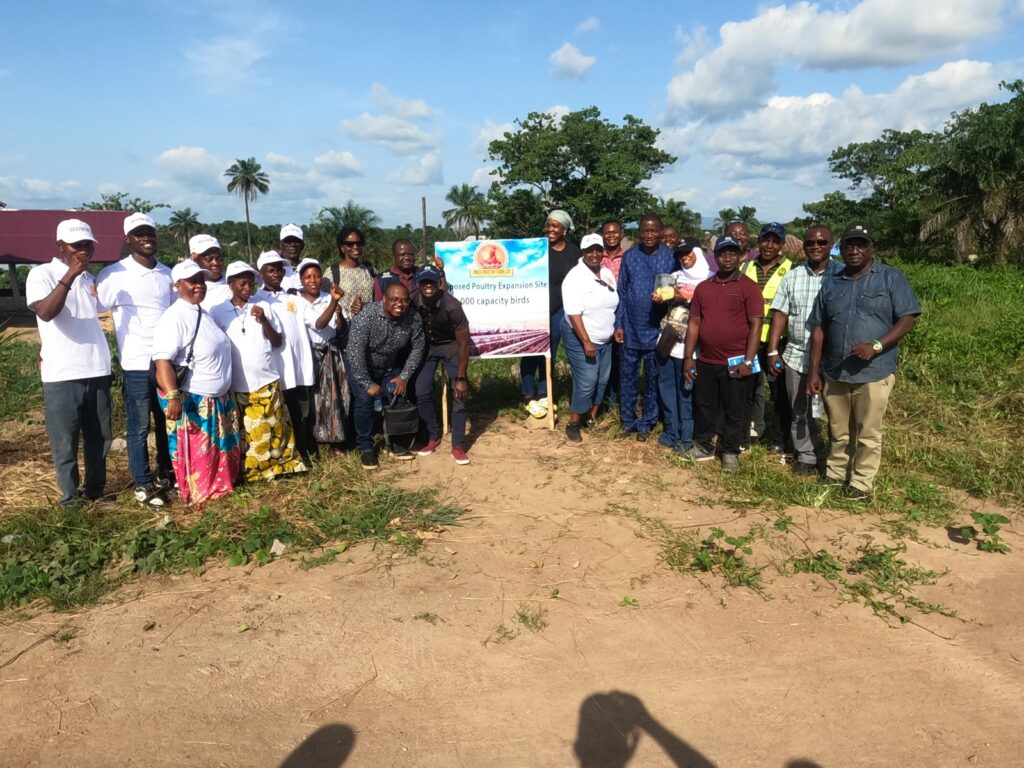
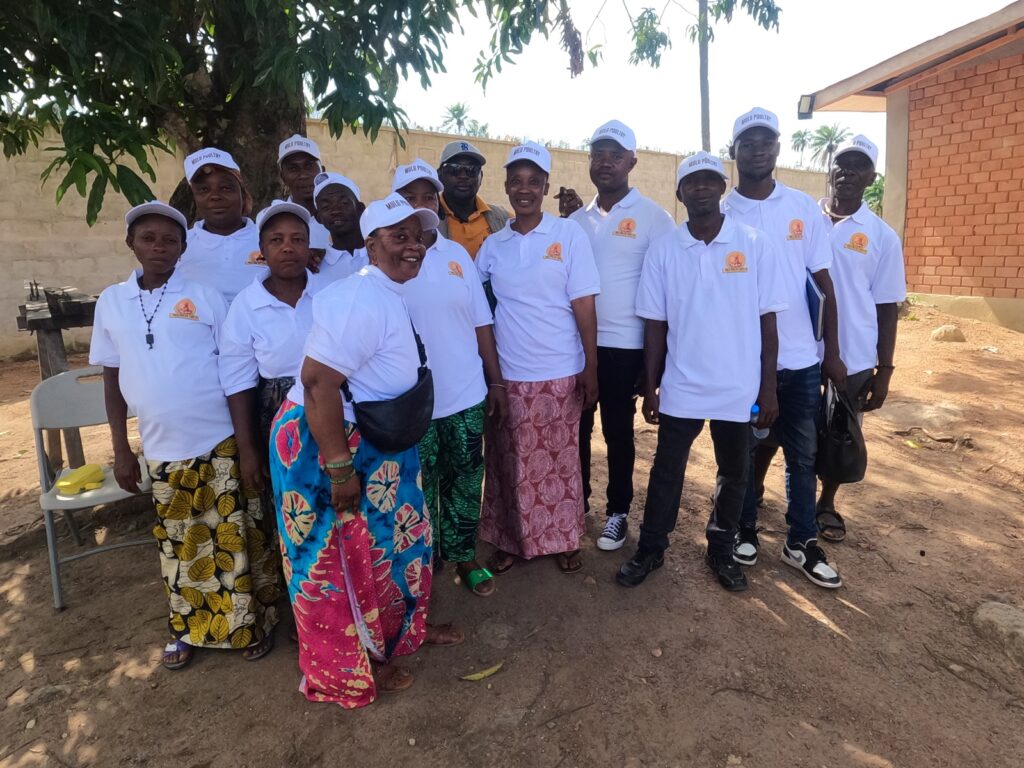
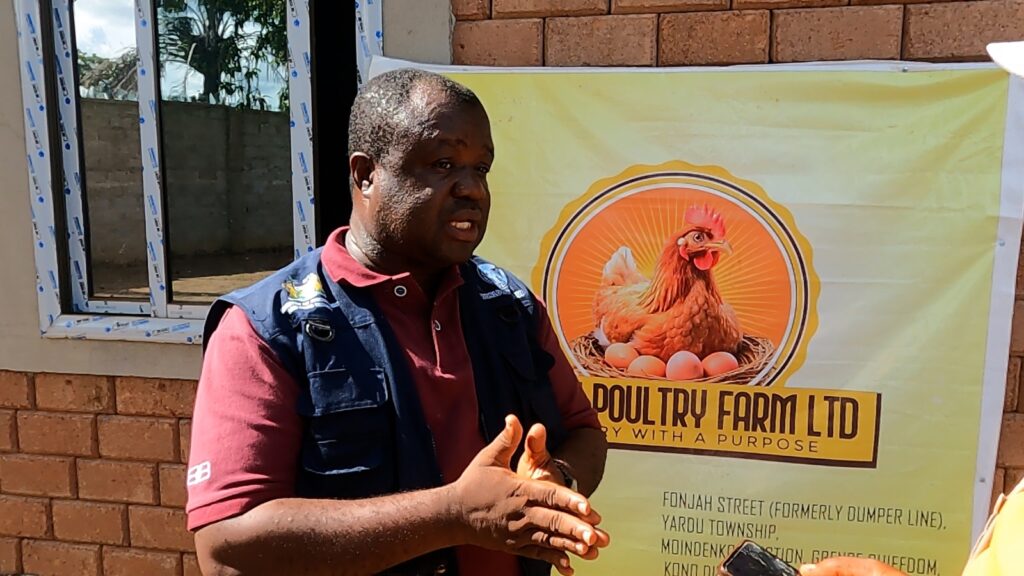
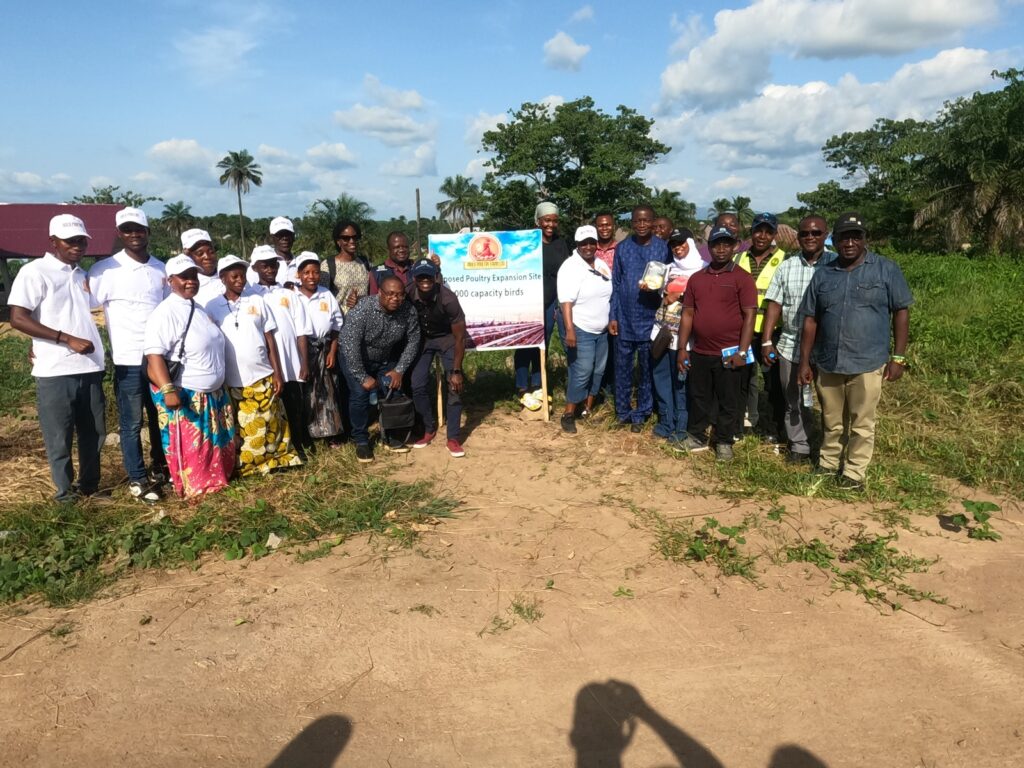
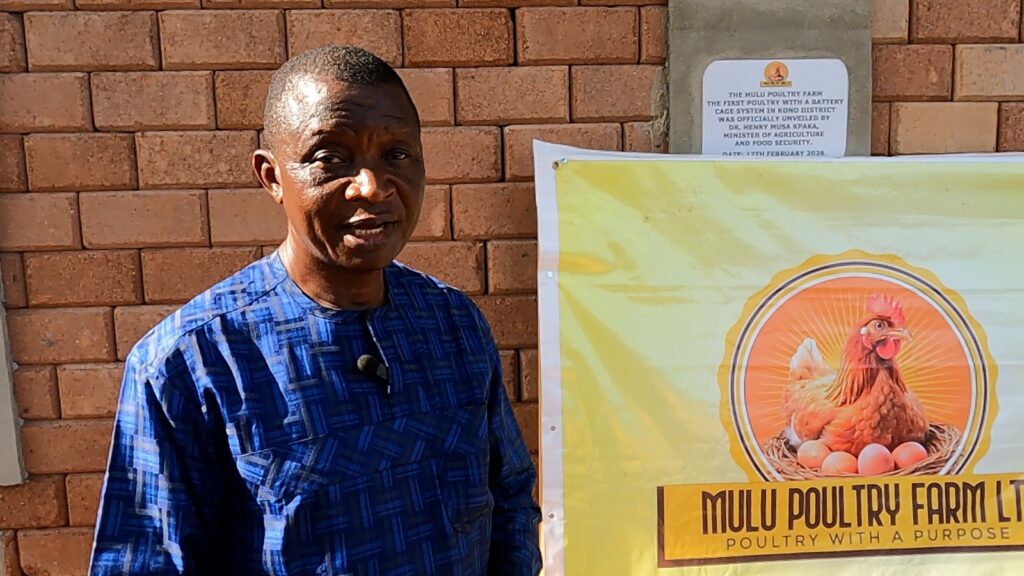
A high-level delegation from the World Bank-supported Food Systems Resilience Program (FSRP) has completed a midterm review visit to Mulu Poultry Farm in Kono District to assess project implementation, engage stakeholders, and identify opportunities for strengthening agricultural productivity, food security, and climate resilience.
The delegation was led by Dr. Adetunji Olakpe, Task Team Leader for several World Bank-supported agricultural programmes in Sierra Leone. Other members included Mohamed M. Sippo, Technical Director of FSRP; Thomas Moore Turay; Dr. Kepifri Lakoh, Project Manager of FSRP; Chris Brima and Flalima Tejan-Sei of the World Bank Group; Mohamed D. Rogers of ISDF/FSRP; Finda Joseph of FSRP; and Olaimatu Sadie Karim of FSRP-GEF.
They were joined by Jinnah Bockarie, District Agriculture Officer (DAO) of the Ministry of Agriculture and Food Security in Kono District.
Providing an update on the farm’s progress, the Chief Executive Officer of Mulu Poultry Farm, Madam Sitta Isata Kaikai, said the grant support received through FSRP has significantly improved the farm’s operations and market reach.
She disclosed that the company has expanded its operations by establishing another branch in Tonkolili District and is planning to venture into the production of poultry feed. According to her, the farm is also collaborating with farmers’ associations across Kono District to strengthen partnerships and boost agricultural productivity.
Madam Kaikai explained that Mulu Poultry Farm was established to help bridge the gap in egg production in Kono District, where demand continues to exceed supply.
She revealed that the farm has created employment opportunities for more than thirty local residents.
She further informed the delegation that the farm is committed to preventing gender-based violence within its operations while promoting environmental sustainability through climate-smart agricultural practices. Poultry waste generated on the farm, she noted, is recycled into organic manure for agricultural use.
Madam Kaikai appealed for additional capacity-building support and the provision of an agronomist, particularly as the farm plans to expand into greenhouse agriculture.
She also stated that with support amounting to one million dollars, the farm has the collateral and management capacity required to effectively utilize such an investment.
Speaking during the visit the Team Lead for World Bank Supported Project of which FSRP is one Dr. Adetunji Olakpe acknowledged both the achievements and challenges facing small and medium-sized enterprises (SMEs) in Sierra Leone’s poultry sector.
Despite existing constraints, he noted that Mulu Poultry Farm has made remarkable progress and currently manages approximately 3,000 chicks, with plans to scale up production to 20,000 chicks. Dr. Olakpe emphasized that the World Bank remains committed to supporting SMEs through capacity-building initiatives and technical assistance aimed at ensuring sustainability and growth.
He commended the leadership of Mulu Poultry Farm for clearly identifying existing gaps and opportunities for expansion, assuring management that support would continue where necessary.
He added that the FSRP is a five-year programme that has now reached its halfway stage, making the midterm review a critical opportunity to assess achievements and strengthen implementation.
Technical Director of FSRP, Mohamed M. Sippo, explained that the programme is being implemented across eight African countries and that the current mission forms part of the World Bank’s annual supervision exercise.
He described the 2026 mission as a critical midterm review aimed at evaluating achievements and identifying areas requiring additional intervention.
According to him, FSRP has provided matching grants to 62 beneficiaries, including Mulu Poultry Farm. He stated that the review team is assessing the gaps facing beneficiaries and exploring ways to provide further support.
Mr. Sippo observed that Mulu Poultry Farm is steadily transitioning toward large-scale commercial production. He revealed that management has proposed increasing its stock to 20,000 chicks in response to growing market demand.
He emphasized that one of the programme’s key objectives is to improve farmers’ productivity and strengthen their capacity, while also encouraging successful beneficiaries such as Mulu Poultry Farm to provide support and knowledge-sharing opportunities for other farmers.
District Agriculture Officer Jinnah Bockarie said the visit was intended to assess the progress made by the farm and determine how additional support could be provided through the project.
He described the battery cage poultry production system being used by the farm as one of the most effective methods for commercial poultry production.
The visit concluded with renewed commitments from the World Bank